

Language regarding the promotion and resistance of social change is a fine line to walk in today’s socio-political environment. With the ever-growing divide between people on pop culture issues which divide us, we are seeing an increase in divisive strategies on both sides of the argument. In this assignment, we will be looking at the way in which individuals are using language to promote social change as well as those on the opposite side who are resisting social change. We will analyse why these tactics are so effective and how they are using language to manipulate and distort facts for their own message. (Lillis & Mukherjee, 2019)
The British political landscape is coloured by figures on all sides of the spectrum, from left to right to centre. They all differ heavily in their beliefs however they all align on one key factor, how they use language to deliver their point.
Whilst there are many ways in which they deliver their arguments, I would like to focus in on three key areas:
- Slogans
- Whataboutism
- Spin.
Regardless of alignment, or what social change they are looking to bring, many of the mainstream parties operate on catchy, rhythmic and simple to understand slogans no longer than a few words.
‘Britain Needs Reform’ from Reform UK’s 2024 slogan, ‘Change’ Labour’s 2024 slogan, and ‘Greener, Cleaner, Fairer’ the Northern Ireland Green Parties 2024 slogan are all key examples of this. Reform’s slogan conveys their key belief in 3 words, that Britain needs Reform to run the country. Labour’s slogan is even shorter and conveys the current feeling of the country after 14 years of conservative rule, Change. The Green’s slogan zeroes in on their key values, more green climate policy, more clean energy and fairer pay and tax with their slogan using ‘er’ ending words to create a rhythmic catchphrase which sticks in your head. These slogans are designed purposefully with quick recognition and understanding in mind. They do not purposefully target a demographic and try to appeal to as many people as possible using simple language and basic phrases to convey meaning. Each slogan is an attempt to promote their own version of social change, or in the incumbent governments case, resist social change and they achieve varying degrees of success. (Tuck, 2019)
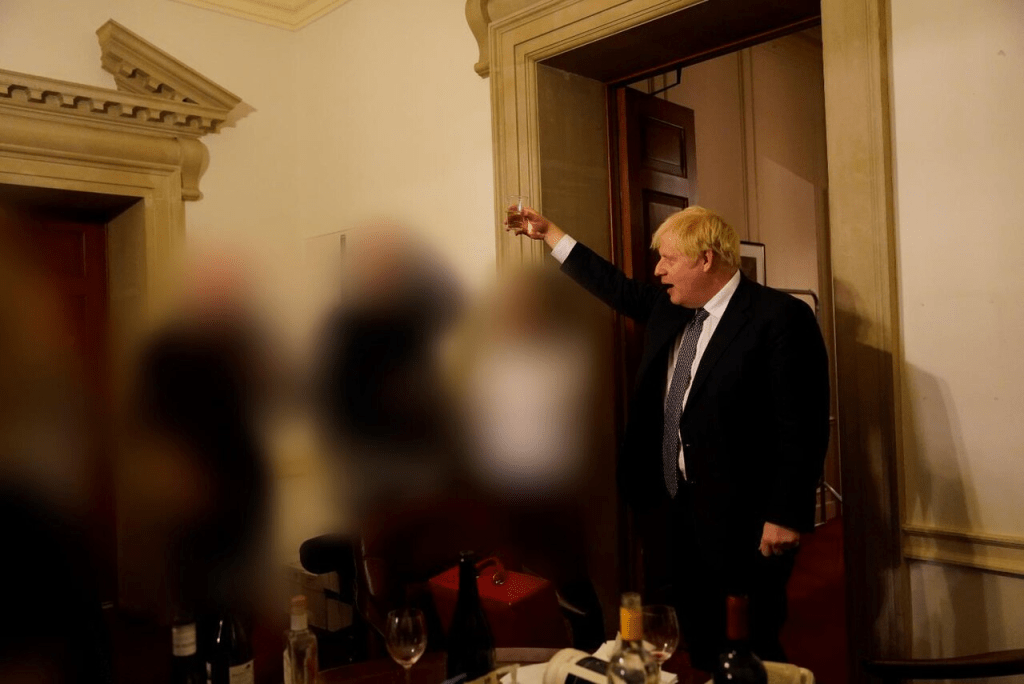
A second and more deceptive linguistic tactic is something known as ‘what-about-ism’ The act of Whataboutism is to ask rhetorical questions to devalue the original point of an argument. (Payne, 2026) This is used day to day by ordinary people, for example a man could say to his friend that he drinks too much, his friend could then respond with what about you, you smoke. Its goal is to create doubt and discredit the original argument or point. This is used by political parties and media outlets to discredit opposing views or proposed social changes they disagree with. An egregious example of this is comments made by former Prime Minister Boris Johnson during the ‘Party Gate’ Scandal. When accused of wrongdoing by then opposition leader Keir Starmer, Johnson employed whataboutism to attempt to discredit Starmer by claiming he did not try to prosecute convicted paedophile Jimmy Savile. (Curtis, 2025) Whilst this claim was found to be false, the use of Whataboutism by Johnson was used to maliciously discredit Starmer, who rightly pointed out Johnson’s wrongdoing. The rise of social media politics has opened the door for more liberal use of whataboutism, with everyone from politicians to commentators to supporters employing whataboutism to discredit those they disagree with, resist social change and spread misinformation to muddy the waters of change.
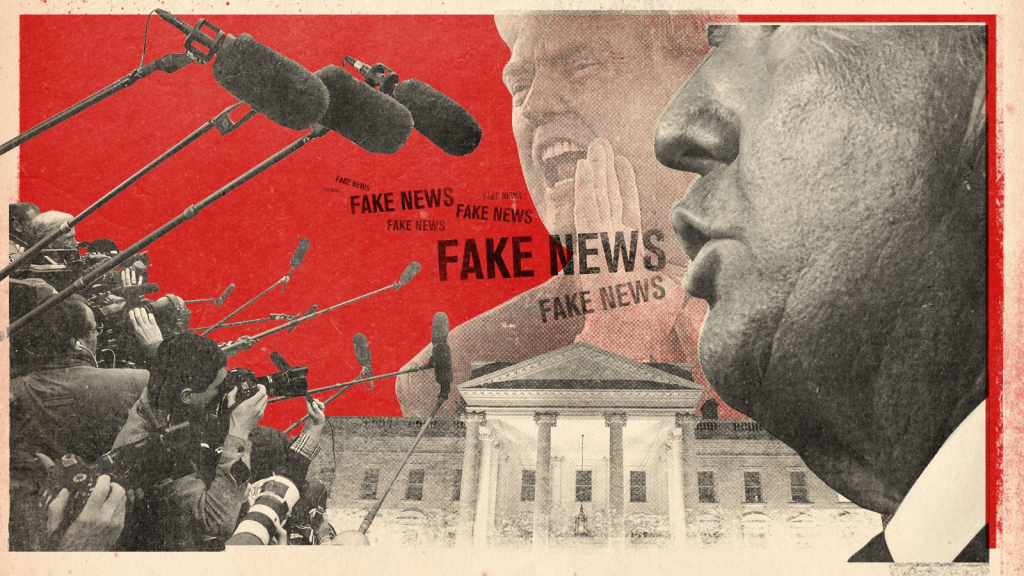
On the topic of misinformation, this tactic is used most famously by Donald Trump, current president of the USA. Using his social platform, he is constantly spreading misinformation to anyone willing to read. (McKee et al., 2024) A particularly poignant piece of misinformation is his constant and unending denial of loss in the 2020 election. In an act to resist change of office and changes to the social fabric of America, Trump enabled a coup attempt during the ratification of the results. (District of Columbia, 2025) This constant stream of misinformation is a perfect example of someone using their platform to promote social change. During his time in office, Trump has made sweeping changes to America, all the while creating a smoke screen of Misinformation, whataboutism and constant posts on his social media page. Whilst many write it off as Trump being Trump, it can also be viewed through this more insidious lens of a powerful man using linguistic tactics to promote his own agenda of social change whilst resisting any other social change promoted by his opposition.
The final piece of major linguistic equipment politics use is spin. Spin is the act of spinning a situation to be politically advantageous or intentional bias to show the good and not the bad. (Braun 2016) Every party uses it day to day, whether it be the current party in Power, Labour, using their social media outlets to publish constant propaganda of their achievements whilst ignoring their shortcomings, or Reform who are currently in the news for a £5 million pound ‘gift’ to their leader Nigel Farage. Reformists are attempting to spin this discovery to be a simple, innocent gift, attempting to spin this from something shady and suspicious to something innocent which does not need looking into. (Isaac, 2026) Spin is an especially powerful linguistic tool in the context of the question raised in this assignment as its main goal is to promote the changes or improvements to society that a party has achieved whilst resisting criticism or protests from opposition. It is a tool which in the wrong hands can and will be misused as it is a powerful propaganda tool which can be used to show things in any light the user wishes.
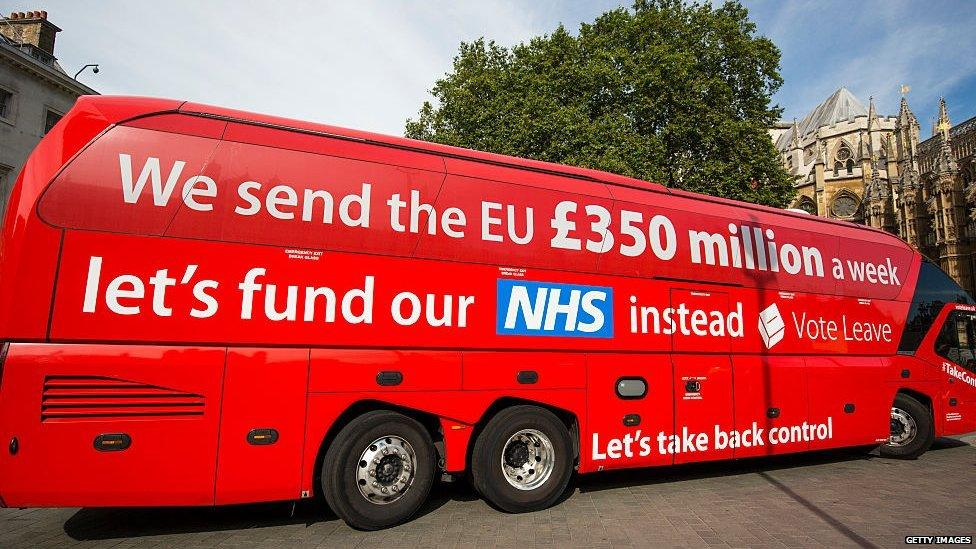
All these tactics put together make up the heavy hitters of the linguistic political toolbox. A key example of this is Brexit. Brexit for better or for worse was the UK’s decision to leave the European Union. Both sides of this argument used all three of these tactics to sway voters. The leave campaign used the slogan ‘Take back control’ depicting the vote as a way for the UK to take back control of its laws, economy and overall sovereignty. (Electoral Commission, 2016’) They faced claims of the UK being better off in the EU with Whataboutism phrases such as ‘What about the money we are sending to the EU?’ and ‘what about the immigration issue, we can take back control of our borders.’ Finally, they used Spin to convince the British public that the leave vote was the right choice. Plastering ‘We send the EU £350 million a week, lets fund our NHS instead’ onto a bus. Spinning the concept of Vote leave as a method to solve other issues such as the mountain of issues with the NHS.
The Remain campaign (Euromove, 2016) ran on the slogan ‘Britain Stronger in Europe’ implying leaving
the EU would weaken Britain, attempting to capitalize on the fear of regression for the economy and living standards. Whataboutism was employed to deflect points with phrases such as ‘What about our relationship with our neighbours?’ and ‘What about being a part of the European single market?’ Finally, spin was used to defend the stance of the UK being in the EU, spinning the Leave Party to be nothing more than paranoid conspiracy theorists with the BBC quoting George Osborne:
‘The next thing we know, the Leave camp will be accusing us of faking the moon landings, kidnapping Shergar and covering up the existence of the Loch Ness monster’ (Wheeler & Moseley, 2016)
To conclude, linguistic tools such as Spin, Whataboutism and Slogans can be and are used frequently in the political sphere to promote and resist social change. Looking at these tactics using the context of Brexit, we can see both sides using these tactics with the express goal to promote their own version of social change and resist the opposing view. Deconstructed, it is easy to see, understand, and avoid falling for these tactics. However, when put together they can be hard to spot and easier to fall for, which in my opinion is why they are so powerful in political circles. The whole goal of politics is to promote and enact social change and resist opposition social change. Having these tools to hand can be incredibly dangerous in the wrong hands as they can allow and have allowed over history for ideologies to rise and empires to crumble. The Nazis came to power using these tools and nearly conquered the western world consequently, using these tools to enact their brutal and horrific form of social change. We need to keep watch of these linguistic tactics and view what politicians say with a balanced viewpoint and consider the use of such linguistic tactics to promote and resist social change.
References
Lillis , T. and Mukherjee, S.J. (2019) Unit 21 Language, politics and the media: Part 1, Open University. Available at: https://learn2.open.ac.uk/mod/oucontent/view.php?id=1393622 (Accessed: 17 May 2026).
Braun, Sandra. “political spin”. Encyclopedia Britannica, 27 Oct. 2016, https://www.britannica.com/topic/political-spin. Accessed 17 May 2026.
Payne, L. (2026) Whataboutism | definition, examples, etymology, logical fallacy, politics, & facts | britannica, Britannica. Available at: https://www.britannica.com/topic/whataboutism (Accessed: 17 May 2026).
Isaac, A. (2026) Exclusive: Nigel Farage was given undisclosed £5m by crypto billionaire in 2024, The Guardian. Available at: https://www.theguardian.com/politics/2026/apr/29/revealed-nigel-farage-was-given-undisclosed-5m-by-crypto-billionaire-in-2024 (Accessed: 17 May 2026).
McKee, M., Pagel, C. and Buse, K. (2024) Disinformation enabled Donald Trump’s second term and is a crisis for democracies everywhere | the BMJ, theBMJ. Available at: https://www.bmj.com/content/387/bmj.q2485 (Accessed: 17 May 2026).
Curtis Benjamin Senior Lecturer in Philosophy and Ethics, B. (2025) Whataboutism: What it is and why it’s such a popular tactic in arguments, The Conversation. Available at: https://theconversation.com/whataboutism-what-it-is-and-why-its-such-a-popular-tactic-in-arguments-182911 (Accessed: 17 May 2026).
(2016) Electoral Commission designates ‘vote leave ltd’ and ‘The in campaign ltd’ as lead campaigners at EU Referendum | Electoral Commission. Available at: https://www.electoralcommission.org.uk/media-centre/electoral-commission-designates-vote-leave-ltd-and-campaign-ltd-lead-campaigners-eu-referendum (Accessed: 17 May 2026).
Euromove (2016) Euromove, Archive. Available at: https://wayback.archive-it.org/7397/20160614212725/http://euromove.org.uk/ (Accessed: 17 May 2026).
Wheeler, B. and Moseley, T. (2016) How EU referendum insults escalated. rep. BBC News. Available at: https://www.bbc.co.uk/news/uk-politics-eu-referendum-36304729 (Accessed: 15 May 2026).
Lillis , T. and Mukherjee, S.J. (2019) Unit 21 Language, politics and the media: Part 1, Open University. Available at: https://learn2.open.ac.uk/mod/oucontent/view.php?id=1393622 (Accessed: 17 May 2026).
District of , C. (2025) The January 6 attack on the U.S. capitol, American Oversight. Available at: https://americanoversight.org/investigation/the-january-6-attack-on-the-u-s-capitol/ (Accessed: 17 May 2026).
Tuck, J. (2019) Https://learn2.open.ac.uk/mod/oucontent/view.php?i…, The Open University. Available at: https://learn2.open.ac.uk/mod/oucontent/view.php?id=2397820 (Accessed: 17 May 2026).

